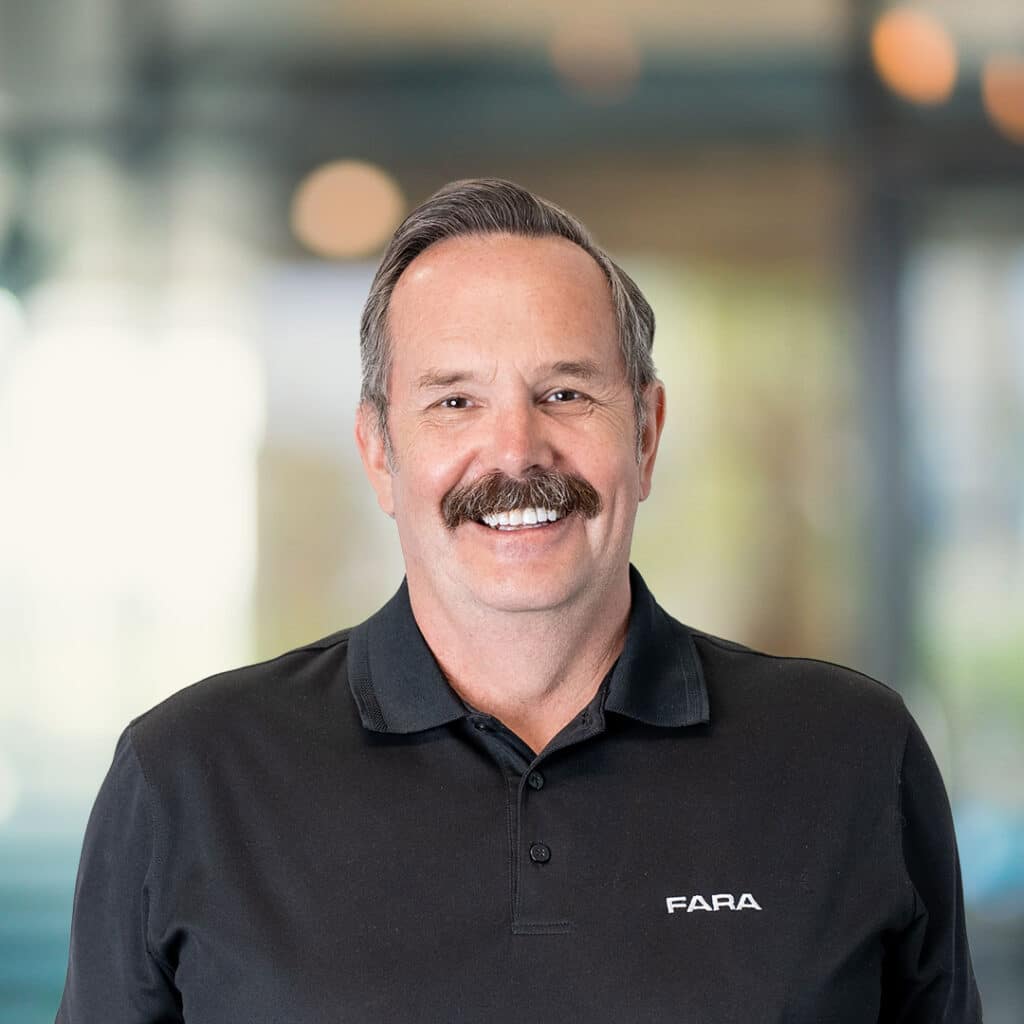
Featuring insights from Chris Jones, Warrin Orman and Ian Meaton – straight from the FARA frontline.
SEQ’s construction market hasn’t slowed down – it’s stepped into something bigger.
Queensland is now firmly in what they’re calling a ‘construction super-cycle’, with a pipeline averaging around $69 billion annually and forecast to peak at approximately $75 billion by 2027-28 – driven by population growth, energy transition and the long runway to Brisbane 2032.
The opportunity is significant. The pipeline is real.
But delivering it? That’s where the industry is evolving fast.
We sat down with FARA Directors Chris Jones and Warrin Orman, and Estimating Manager Ian Meaton, to unpack where the market’s heading.
Procurement: more structured, more strategic
Procurement is becoming more deliberate.
“Yes, projects are taking longer to move from tender to contract,” Ian says.
“I don’t think we can call them delays anymore,” Ian says. “It’s just the reality of how projects move now.”
What used to be a linear path has become:
- Tender
- Review
- Revalidation
- Internal approval cycles
- Re-scoping (sometimes), and
- Then … maybe contract.
And every loop adds complexity – and risk:
- Pricing expiry
- Trade availability changes, and
- Design misalignment
Momentum is no longer guaranteed. It has to be actively managed.
We’re seeing a clear divide:
- Projects that move forward with confidence, and
- Projects that stall while trying to align.
The difference is clear. Successful projects:
- Engage early
- Align stakeholders upfront
- Structure procurement more strategically, and
- Build confidence from the beginning
Key takeaway: The most effective teams aren’t resisting this shift – they’re planning for it. For fewer headaches and more control throughout the entire project journey, push for builder engagement earlier (hint hint ECI) and lock in program buffers before your project hits crunch time.
The Olympics and cost pressure: a market already shifting
History shows that mega-events amplify cost pressures through compressed timelines and concentrated labour demand – and South East Queensland is already on that trajectory.
“We’ve always known Brisbane 2032 would be a catalyst – but the real peak is well and truly still ahead,” Warrin says.
Brisbane is now leading the nation in construction cost escalation, with increases tracking 4–6% annually and forecast to reach 10% as Olympic demand builds.
Across Australia, commercial construction costs have risen over 30% in recent years. While materials initially drove this spike, labour is now the dominant pressure.
And importantly, the full impact of the Olympic pipeline is still ahead.
What we’re seeing now is a shift from anticipation to preparation. Contractors are:
- Positioning early for upcoming work
- Investing in workforce and capability, and
- Becoming more selective about the projects they take on.
“While we expect activity to meaningfully impact the market around 2027–28, businesses are already investing in people, systems and relationships to be ready,” Chris adds.
This early movement is already changing the market – driving more proactive workforce planning, stronger alignment between clients and contractors, and growing confidence across the industry.
Key takeaway: The Olympic pipeline isn’t just future demand – it’s shaping today’s costs, capacity and competition. Those who plan early, align teams sooner and make informed decisions now will be best placed to navigate what’s coming.
Labour: the challenge and the opportunity
“We know demand for labour is increasing,” says Warrin. “That’s significant, and it’s shaping how the entire industry thinks about capability.”
What’s interesting is that everyone agrees there’s a labour challenge. The issue isn’t recognising the problem – it’s changing how we respond to it.
“The industry has been talking about workforce shortages for years, but we’re not seeing enough change in how the industry is attracting, training, and retaining people.”
Warrin sees two major opportunities. The first is tapping into the knowledge of experienced tradespeople who left the industry during and after COVID.
“We’ve got decades of experience sitting on the sidelines. There’s an opportunity to find ways to bring that knowledge back through mentoring and training.”
The second is making construction a more attractive career choice.
“We need to make trades as appealing as a university pathway and create training environments that attract a broader range of people, particularly women.”
As Warrin puts it: “This isn’t something industry can solve alone. Government, education and business all have a role to play.”
Key takeaway: Everyone recognises the labour challenge. The opportunity now is to stop talking about it and start building a stronger, more skilled and more diverse workforce for the future.
AI as workforce strategy
In 2026-27, we’re expecting to see more instances of AI reshaping the construction sector – not through disruption, but as a powerful, underlying enabler.
What’s striking is that adoption isn’t loud or experimental – it’s steady, deliberate, and being driven by high-performing teams looking for a competitive edge. As capability builds, AI is helping teams make better decisions earlier, reduce inefficiencies and deliver with greater confidence.
Warrin takes a more expansive view of what’s unfolding – and what’s at stake.
“AI isn’t just a productivity tool for construction – it’s becoming a structural solution to workforce constraints. In the same way the tractor transformed agriculture, AI will reshape how we think about labour, skills and capacity.”
With labour shortages, declining birth rates and ongoing pressure on workforce supply, the industry is facing a widening gap between the work required and the people available to deliver it.
“AI has the capacity to fill the jobs the current population can’t – and, in many cases, never will,” Warrin says. “It frees people up to do higher-value, more skilled work.”
Critically, he sees AI not as a replacement for workforce policy, but as a complement to it.
“It needs to go hand in hand with a more considered immigration approach – one that focuses on bringing in the skills we genuinely need, while AI supports and scales the rest.”
Key takeaway: The conversation shouldn’t be about how AI replaces jobs. It should be about how AI helps fill the workforce gaps we can’t otherwise solve – creating capacity, unlocking productivity and enabling more people to focus on the skilled work that drives the industry forward.
The culture and resilience: The underrated advantage
While discussions about labour shortages often focus on challenges, the reality is that SEQ construction is entering one of the most exciting periods in its history – and there’s enormous opportunity for individuals and businesses prepared to embrace it.
“People are looking beyond salary now,” Warrin says. “They want to be part of teams where they’re trusted, supported and set up to do their best work.”
The organisations attracting the best talent are those creating strong cultures, investing in their people and building resilient teams that can adapt and grow as the industry evolves.
That resilience matters. The individuals who embrace change, continue learning and perform well under pressure are increasingly being rewarded with greater career opportunities, responsibility and long-term success.
And the benefits flow directly to clients through:
- Stronger collaboration and communication
- Greater accountability and problem-solving
- Better staff retention and team continuity, and
- More consistent project outcomes.
Chris puts it simply: “If your environment isn’t working for your people, it won’t work for your projects either.”
In a market full of opportunity, culture is becoming a key differentiator. The businesses that invest in their people today will be the ones best positioned to capitalise on the growth ahead.
Key takeaway: This is an exciting time for the industry. When choosing a builder, look beyond capability alone. The teams with strong cultures, resilient people and long-term staff are the teams best equipped to navigate change, seize opportunities and deliver exceptional outcomes.
So, where does that leave you?
If you’re planning, funding or delivering projects in 2026–27, the outlook is clear: costs will remain elevated, labour will stay tight, procurement will become more competitive and project certainty will be harder to achieve.
In this environment, the projects that succeed will be the ones that bring the right people together early, collaborate effectively and make informed decisions before key risks are locked in.
That’s why we’re seeing the growing value of Early Contractor Involvement (ECI).
“Without early input, you’re often locking in risk without realising it,” Ian says. “ECI gives you the chance to test cost, methodology and staging while there’s still time to adjust.”
By bringing builders, designers, consultants and clients together from the outset, ECI creates a more collaborative environment where challenges can be identified earlier, opportunities can be explored and decisions can be made with greater confidence.
The result is:
- Greater cost certainty
- Earlier risk identification and mitigation
- Smarter procurement strategies
- Better alignment across stakeholders
- More practical, buildable outcomes
As Chris puts it: “The earlier you align design, cost and construction thinking, the more certainty you create.”
At FARA, this collaborative approach is at the heart of how we work. Our team brings together construction expertise, cost planning insight and practical delivery experience to help clients navigate complexity, reduce risk and make better decisions from day one.
Have a project on the horizon? We’d love to talk about how our team can partner with yours to create certainty, unlock value and deliver the best possible outcome for your business.