A conversational take on assumptions, credibility and the women reshaping construction in 2026.
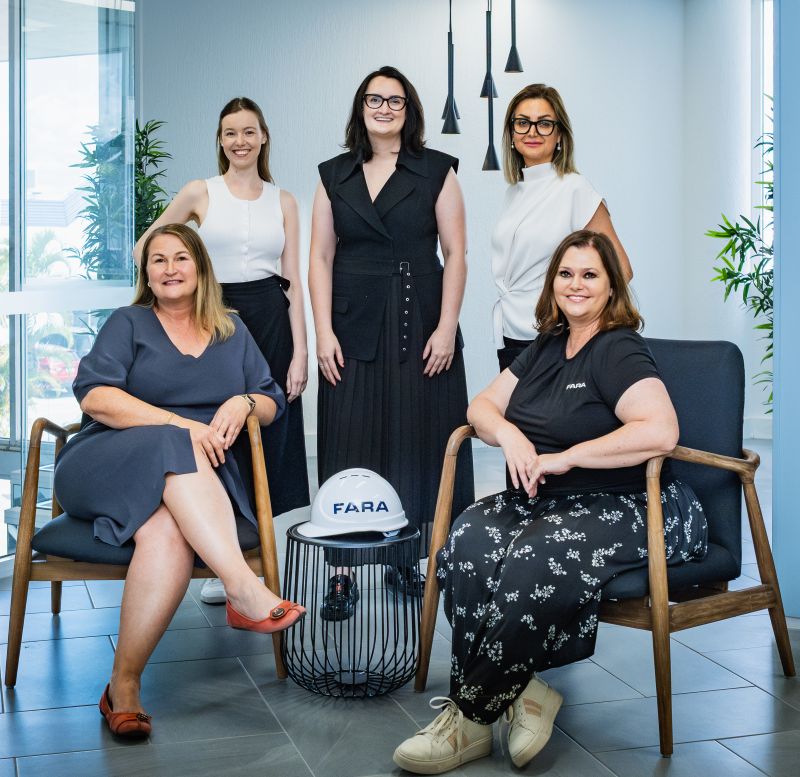
You’d think people would know better by now.
Yet we still hear it – the assumption that makes every FARA team member do the slow internal (or external, for those with weak poker faces) eye‑roll:
“Is that woman the project admin?”
“No – she’s the Senior Project Manager.“
Welcome to construction in 2026.
One tiny interaction that sums it up: an industry moving forward, while a handful of dusty old assumptions shuffle along behind it.
Is this what people call ‘woke’?
Some corners of this industry love to joke that hiring women is woke. If that’s the case, then being woke looks suspiciously like getting things done well.
Because here’s what we see at FARA: Diversity always improves performance.
More perspectives mean fewer blind spots.
So if recognising talent in all its forms is woke, then sure.
Let’s be woke.
It’s working.
The visibility gap
Women aren’t new to construction. What’s new is the industry finally noticing.
For decades, women have been quietly delivering major projects, coordinating crews, managing budgets, running sites and solving the problems no one else wanted to touch. But too often, they were hidden behind job titles that didn’t reflect their impact or assumptions that undermined their authority.
Today, the visibility is rising – 15% of Queensland’s construction industry are women – but old mindsets are still catching up.
It shouldn’t raise eyebrows to see a woman onsite.
A woman as Project Manager? Normal.
A woman as Site Manager? Normal.
A woman leading HSEQ? Normal.
A woman tradie? Normal
A woman engineering the solution? Normal.
A woman advising construction businesses? Normal
What’s not normal is expecting her to jump through hoops before she’s allowed to get on with her actual job.
But here we are.
The default setting: Men start at credible. Women start at prove it.
Let’s tell it like it is: men in construction are given the benefit of the doubt upfront. They walk onto site and people assume competence. Simple.
Women walk onto the same site and suddenly there’s a mental checklist:
- Is she actually meant to be here?
- Does she know what that tool does?
- Is she lost?
Cue the invisible induction:
- Prove you know your stuff
- Prove you’re qualified
- Prove you can handle pressure
Then – just when you’ve earned respect – you get to do it all over again on a new project.
It’s not always intentional. But it’s built in.
And whether you call it bias, habit, or good old-fashioned underestimation, it creates a very real two‑lane highway to respect. One lane smooth, the other… under construction.
International Women’s Day: Why we still need it
IWD matters because the double standards still exist – the ones women navigate quietly every day while leading teams, delivering milestones and keeping projects on track.
IWD is a reminder that respect shouldn’t be conditional.
Credibility shouldn’t be gendered.
And assumptions need to evolve faster.
It’s a chance to spotlight the perspectives of women shaping our industry – not because we need to justify their presence, but because their contributions are reshaping construction for the better.
Woke? Call it what you want. We call it working.
If being ‘woke’ means recognising talent that’s been here all along and clearing the path so it can thrive.
Yes, sign us up – it’s working, and it’s overdue.
At FARA, we back talent wherever it stands – in boots, on the tools, in the office, behind the plans, or leading the entire project.
We’re building teams that reflect the future of construction.
Because the real progress will be obvious the day every person on every construction site sees a woman and thinks the most accurate statement of all:
“She knows exactly what she’s doing.”