Otto Hirschfeld Stormwater Upgrades
The University of Queensland
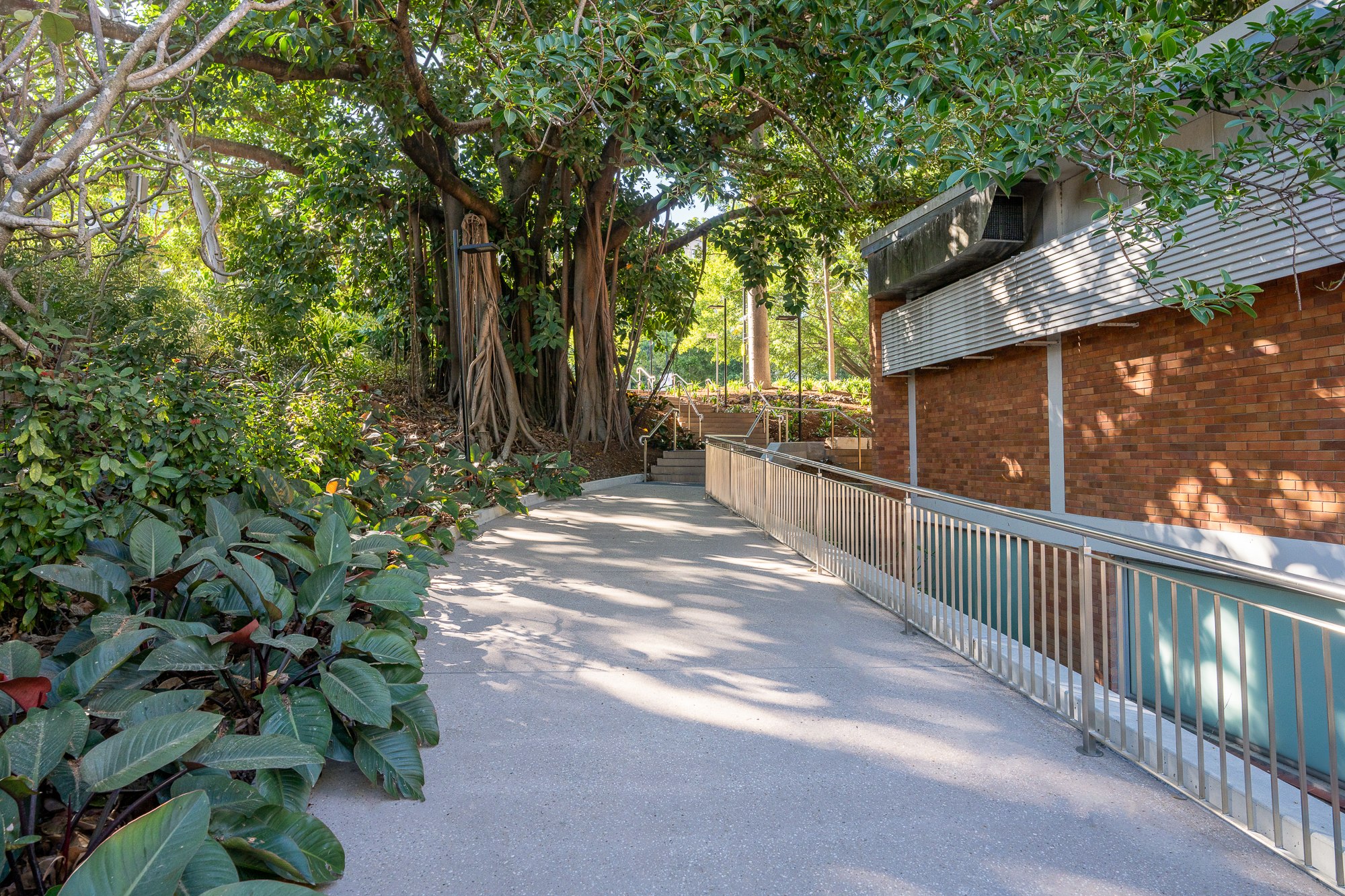
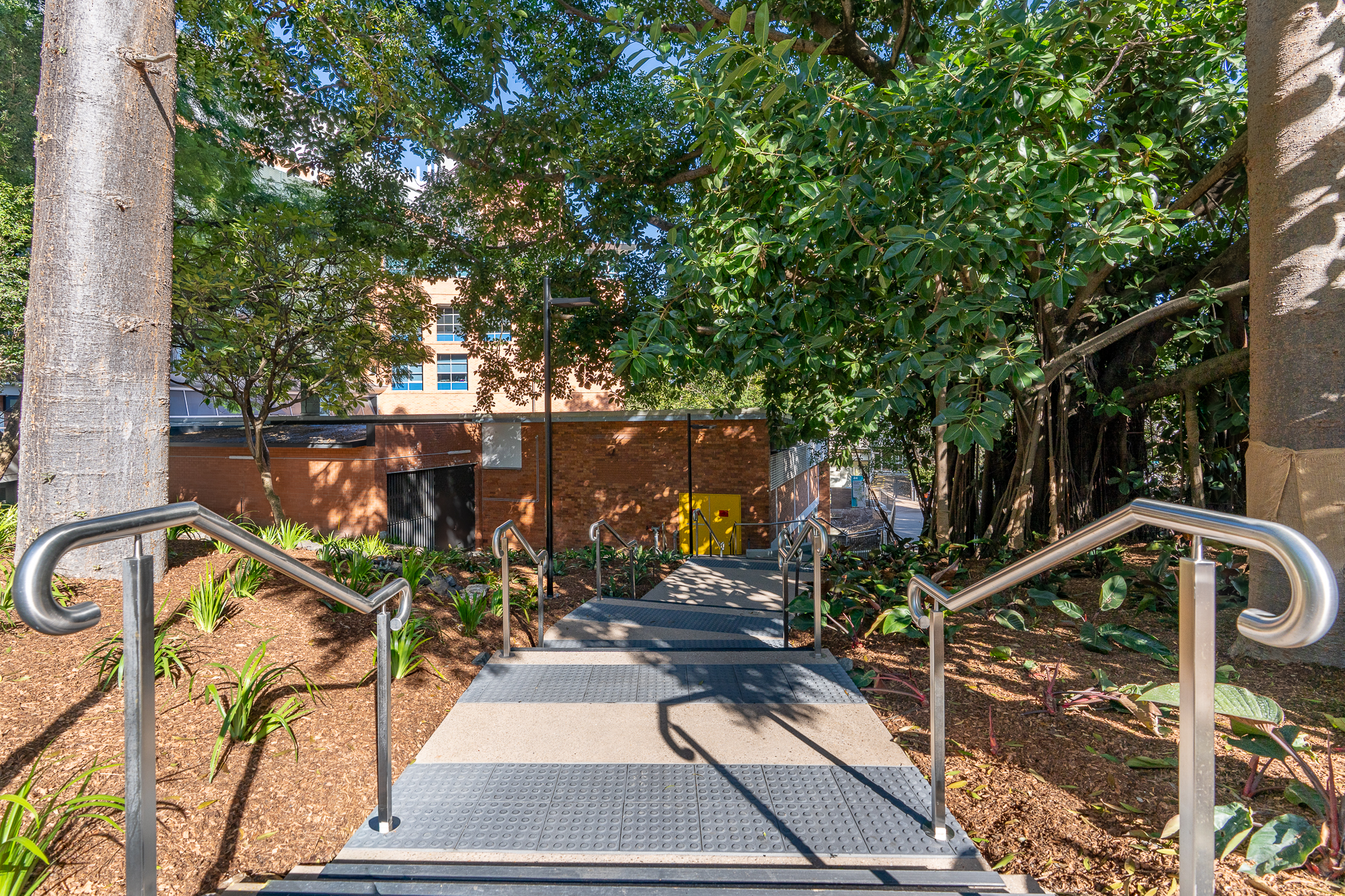
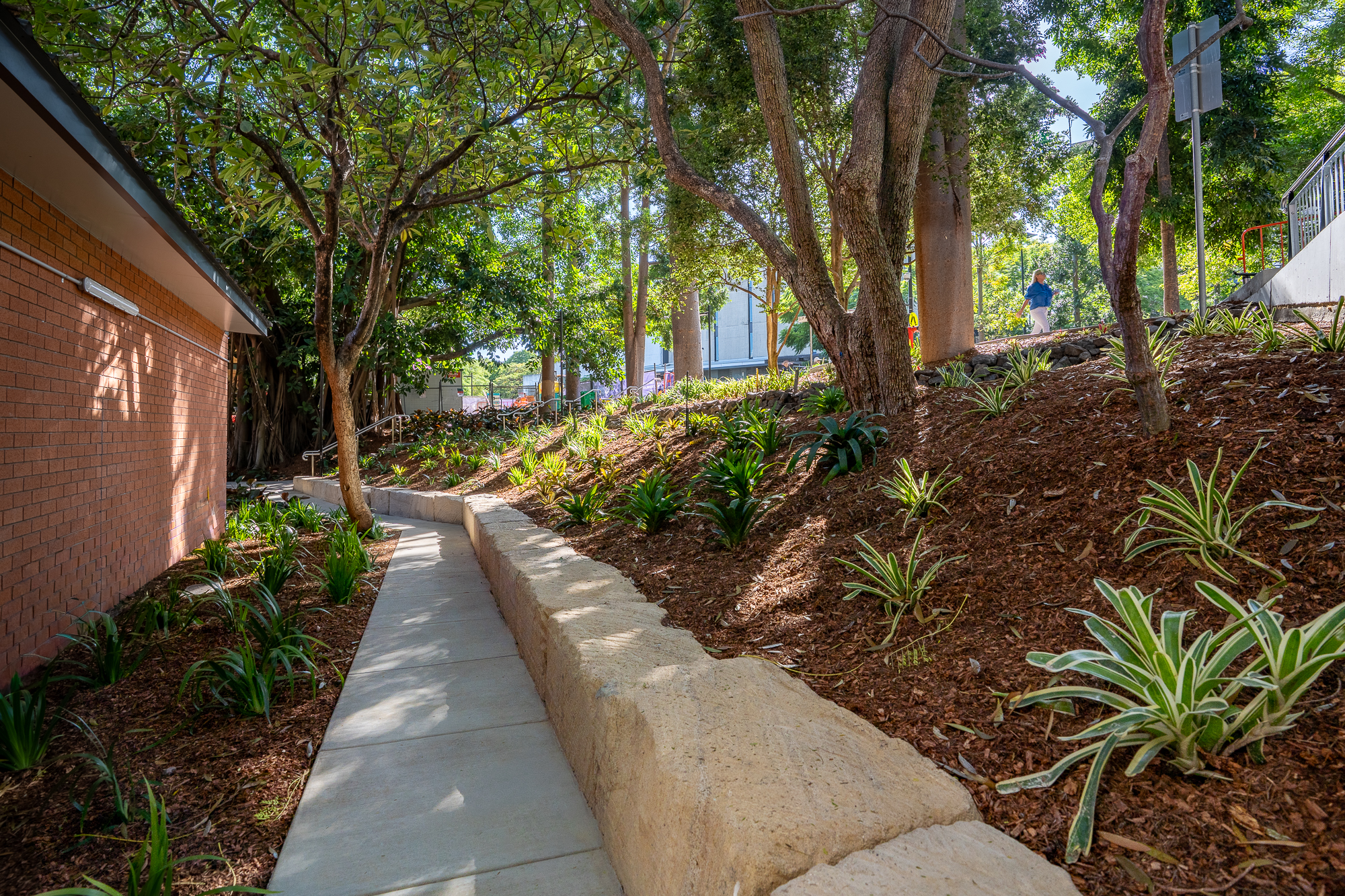
To enhance long-term performance of the Otto Hirschfeld Building, we delivered accessibility and site functionality upgrades, including an improved stormwater drainage system, a new external ramp, stair landings, kerbs and landscaping – creating a safer, more accessible environment for staff and students.
- External works
- Live environment
- Landscaping
- Education
- Universities
Occupied Space
Jon Williamson
Sebastian Bornkessel
The Brief
The University of Queensland engaged FARA to deliver external access and infrastructure upgrades at the Otto Hirschfeld Building, a highly trafficked area of campus with a critical pedestrian connection.
A key driver for the project was addressing ongoing stormwater challenges caused by the sloped nature of the existing pathway. During heavy rainfall, surface runoff was difficult to control, impacting usability and safety.
The scope included replacement of the existing ramp and landings, upgrades to external stairs, new kerbing, landscaping works and significant improvements to the site’s stormwater infrastructure. With the pathway forming a vital link for students and staff, maintaining access and minimising disruption remained a priority throughout delivery.
Having previously delivered works within the building – a PC2 lab fitout – FARA brought valuable site knowledge and an understanding of the operational environment.

Our contribution
We worked closely with UQ and the consultant team to develop and deliver a solution that addressed both accessibility and the underlying drainage challenges.
The team delivered a full replacement of the external ramp and landings, incorporating upgraded lighting to improve safety and usability. New stair landings and modifications enhanced accessibility, while new kerbing helped better define flow paths across the site.
A major focus was correcting and improving stormwater performance across the sloped pathway. Works included upgrades to drainage infrastructure and careful grading to better capture and direct runoff, reducing the risk of ponding and water ingress during storm events.
Construction was carefully staged within the live campus environment, ensuring pedestrian movement was maintained where possible and enabling efficient reopening of this critical access route.
The remarkable project outcome
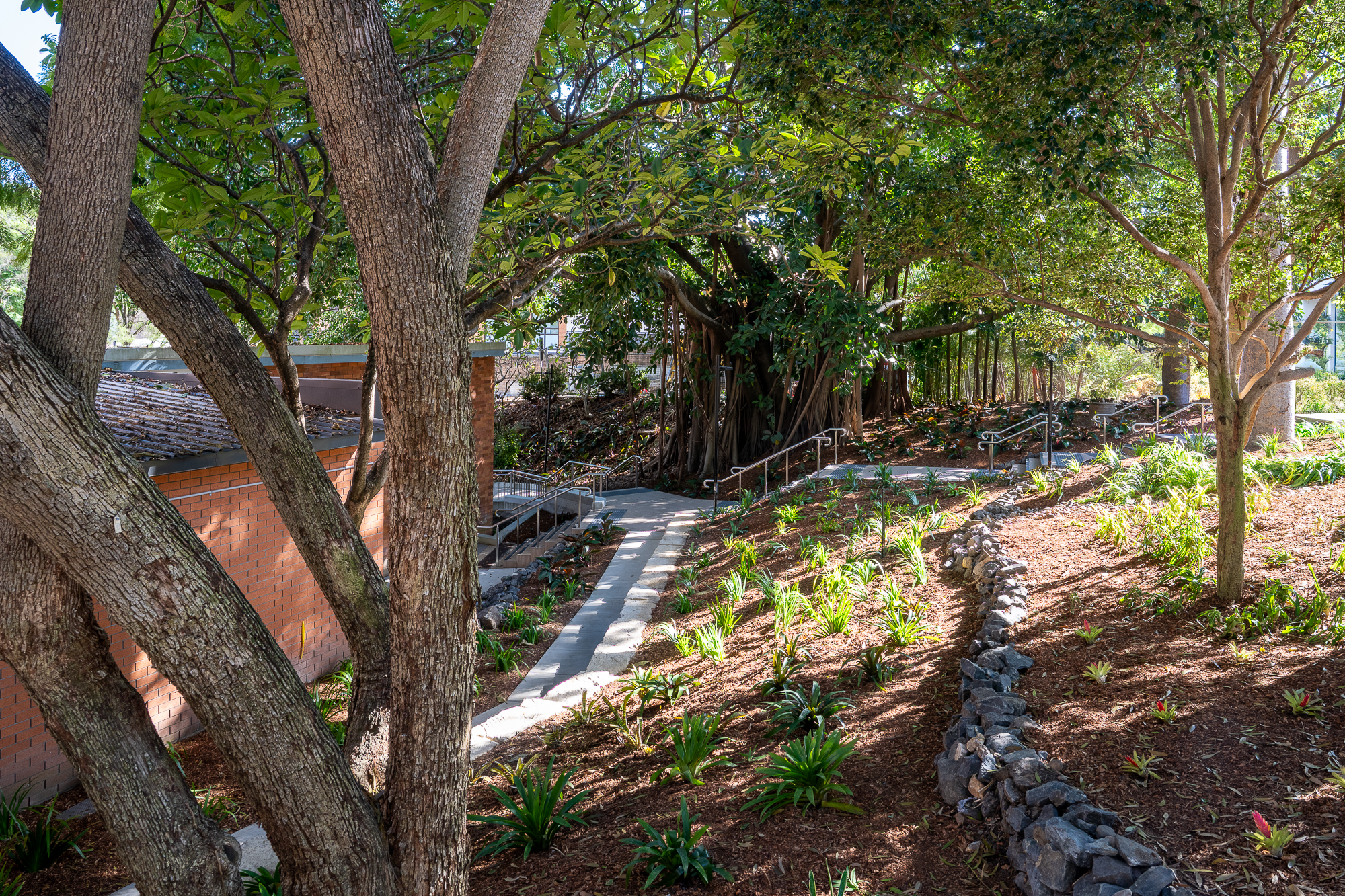
The completed project has delivered a safer, more accessible and significantly more resilient pathway for the University. By directly addressing the stormwater issues created by the site’s slope, the upgraded infrastructure now performs reliably under varying weather conditions.
The pathway, once reopened, was immediately back in use—highlighting its importance as a vital campus connection for students and staff.
Delivered efficiently and with minimal disruption, the project demonstrates FARA’s ability to solve complex, site-specific challenges while enhancing the day-to-day experience of end users. With this stage complete, works have progressed into the next phase focusing on underground stormwater upgrades to further strengthen long-term performance.